
A few days ago, I got this email:
Subject: Fellow Bruin (and Interosity sub) Reaching Out!
Hi Dennis,
I hope this email finds you well! I am [Name], a fellow Bruin studying [some rather exciting stuff]. I learned a lot more about BCG after hearing you, [some other UCLA alumni] speak about your experiences there during the [a rather exciting event]. Recently, I have been thinking deeper about what I want out of a career, and would love to find out more about your work as a consultant.
Having followed Interosity since freshman year, I really respect the way you think, and the way you live life fully and ambitiously. You’ve inspired me in many ways (I recently ran the LA marathon, started a substack, and the PCT is definitely in my books!) and it would mean a lot to me if you could spare some time for a call! I will probably ask you about the BCG recruitment process, but more importantly I want to hear your honest thoughts about your work there, and any advice you would have for me as I think about my first job. If we have some time left, it would be cool to also discuss your views on AI!
If you are open to a brief meeting, please let me know when you are available, and I can send a calendar invite! After this week, I am generally available [times].
Thank you for your time!
Yours sincerely,
[Name]
Not too much later, another email:
Subject: Aspiring Professional Slide Maker
Hi Dennis,
My name is [Name], you might know me as the former youngest person ever. Whilst reading Interosity, I stumbled across such a grandiose linkedin (yours). I am reaching out because I go to class usually and hang out with friends in the same location you did (UCLA). I also saw you currently make really cool slides, and the great story teller you are, I would love to hear more about your time at BCG.
If you have 15-20 minutes in the upcoming week, amidst your non-training marathons, I’d really appreciate the chance to connect. (Personal professional autobiography [resume] attached for context)
Best Regards,
[Impressive qualification]
[Name]
Besides being delights to read and having hilarious subject lines, these emails revealed to me that it was that time of year again: consulting recruitment season. The internship deadlines for most consulting companies were quickly approaching (if they hadn’t already passed), and as a first-year BCG Associate, my inbox began to fill up with these networking requests.
I was in the exact same position myself ~3 years ago and understand the struggle: opaque recruiting processes, unclear expectations, a lack of clear information of what to actually do to get these prestigious internships and jobs. And so in the interest of quite a number of things, including but certainly not limited to:
Sharing my hard-won consulting recruiting wisdom with others seeking to follow this path
Writing something interesting
And saving
myself a shitton of time by not re-explaining the same things over and over again to curious, yet confused, college studentsthe time of everyone involved…
… I’ve decided to sit down, pop open the MacBook Notes App, and organize a brain dump of tips, tricks, resources, blah blah blah, to share with an easy click. This way, when someone reaches out as in the above two emails, I can send this article over as an FAQ, then hop on a call if needed to answer any specific follow-ups; more helpful for them, more interesting to me, time saved for everyone.
I’ve organized this article into a few different sections. Jump around to the parts you find most helpful; reach out to dennis@interosity.co if you have any questions. Or comment directly on this article. Or do nothing lol. If you have a specific question it’s almost guaranteed others do, so send it over and I’ll add my response to the article to help others out. Let’s go!
Table of Contents:
Banger intro
What consulting is
My internship recruitment journey
BCG’s recruitment process
Other resources
What consulting is
At the very highest level, a consulting firm is hired to solve some problem for a client. These problems were so hard that the client couldn’t solve them themselves, so they looked to outside help for guidance.
This may have been because the client doesn’t have the expertise or technical know-how to solve the problem (it’s usually cheaper to hire a consulting company than to hire full-time staff). There may be a disagreement between different internal stakeholders on what to do. Perhaps they want to have a third party mediate (e.g. a division needs to be cut, but the company isn’t sure which one). This means that as a consultant, you work on projects that span any potential problem a client may have. So literally everything.
Broadly speaking, a consulting team is made up of three components: Individual Contributors (ICs), Managers, and Partners, each with unique roles vital to a project’s success. The exact titles of these roles vary between consulting companies, but at BCG these three components translate to these levels:
Individual Contributors (“ICs”): Associates (“As”) and Consultants (“Cs”). Associates are hired straight from undergrad or junior roles elsewhere; Consultants are hired from business school or Ph.D. programs
Managers: Project Leaders (“PLs”) and Principals
Partners: Partners, Managing Director and Partners (MDPs), and Managing Director and Senior Partners (MDSPs)
Note: there are also tons of people who support this entire system: executive assistants, office staff, IT, internal research teams, and many many more; they hold down the fort so the consulting teams can do their thing. Bless their hearts.
As you can imagine, the headcount breakdown is pyramid-shaped, with many Associates and Consultants, a decent number of Project Leaders and Principals, and a few Partners (~2000 across all of BCG).
At the bottom of the pyramid are ICs, who do the analysis, research the problems and their solutions, and create presentations for the project. ICs are the closest to the ground truth data as they’re usually the ones who wrangle things in Excel/PowerPoint, and are usually tasked with one particular branch of the larger project (this smaller branch is referred to as a “workstream” or a “module”). The mark of a good IC is fully “owning” their module, meaning they drive their own work and manage their progress/work well. After a project ends, ICs are either immediately staffed onto a new one or are given a small break by helping out with proposal/short-term work as they await their next project. This is known as “being on the beach”.
You can think of ICs as mental soldiers: brains sharpened by BCG, ready to be deployed onto whatever problems a client throws at them, with occasional downtime between these deployments. The problems, clients, and industries certainly change, but the team's effectiveness remains extremely high throughout. It’s quite the environment to grow. As a first-year Associate, I’m firmly in this IC camp. You will start out in this IC camp, too.
An interesting note is BCG’s region-level staffing model: you’re usually put on projects where the team and client are in the same region as your home office. BCG’s San Francisco office, for example, is part of the West Coast region along with the Silicon Valley, Seattle, Los Angeles, Manhattan Beach, San Diego, and Denver offices, so the teams I work with are from these 7 offices, helping a local client. There are exceptions, of course - I worked on a retail case out of Chicago for a month - but the norm is regional staffing. From what I’ve heard, Bain has local staffing (meaning you work on projects with teams just from your office) and McKinsey has global staffing (meaning your team and client can be from any office). Take that last sentence with a grain of salt, as it’s all hearsay from my end lol.
After my summer internship at BCG, I wrote an article titled How consulting works with a reflection on the experience and more details on how consulting teams operate.
My internship recruiting journey
I’ve written more about the various internships I’ve had and the wacky paths I took to get them here (you can also stalk my LinkedIn), but the short version is this:
Summer 2019: Older sister gets an internship by winning a mechanical engineering design competition at Cal Poly. From this I learn that internships exist and are a thing you can get
Fall 2021: Enroll at UCLA, confused af about what I’m doing with my life. I apply to one business club (BAM) assuming I’ll obviously get it because… wait hold on a second when did clubs start having applications? Then interviews? Wtf? *get immediately cooked in first-round coffee chats and obviously doesn’t get into BAM*
Winter 2022: I kinda understand the business club recruitment process a bit more and significantly lower my standards and expectations. Apply to every single business club I’ve heard of, make significantly more coffee chats, a few final rounds, and only get into The Bruin Group (TBG)
Summer 2022: Intern at First Republic Bank in SF. I got this internship from attending a Handshake Career Fair in October 2021, then applying for every single SF internship they had because they allegedly take freshman interns and pay $30/hr. Got one interview for the Lending Services division, somehow convinced them with my enthusiasm to give me the job. Funny story: because of the UCLA quarter system I was the last intern to start at First Republic (late June), so therefore the last one to finish. First Republic Bank then goes bankrupt shortly after my internship ends, meaning I was the last intern the bank ever had. Watch out banks…
Spring 2023: Got into BCG’s Bridge to Consulting Program (their diversity program, which I qualified for as a first-generation college student). The program hosts a number of different workshops about working for/applying to BCG, then offers you a first-round interview at an office of your choice. I full-sent the Seattle office because 1) I like nature, 2) I (sorta?) like tech, and 3) I wanted to try something new. Made it to the final round interview stage, fumbled the final case interview, didn’t get the offer
Summer 2023: Intern at Kraft Heinz in Chicago. I got significantly more interviews and offers for this summer by virtue of having the First Republic internship on my resume; very much a “once you get experience it’s easier to get experience” kind of situation. Very fun summer
October 2023: I’m randomly reached out to by a BCG Seattle recruiter inviting me to a final round interview for BCG Seattle??? Completely unexpected but I capitalize upon the opportunity; call my friend and casing bestie Tatiana to get me back into casing shape, then successfully crush the final round interview from my tiny 18 square meter apartment in Paris while studying abroad. Lol. Celebrate with friends at Bouillon Republique. Iykyk
Summer 2024: Intern at BCG Seattle. Get a full-time return offer, which I transfer to the SF office (this was a very doable transfer as both offices are in the same West Coast staffing region, more on that later)
January 2026: Start working full-time at BCG SF. Finished two projects so far. Lfg
As you can see, my path to BCG was anything but linear - that’s the key takeaway of this entire section. The dots are easy to connect looking backward but believe me, I was anything but certain and confident as I was going through all these steps! Only now do I look back and think, “Oh obviously it was going to work out as it needed to” - that’s the benefit of hindsight in clear focus right there. Work hard to chase opportunities that come your way and make the best decision you can with the information you have and trust me, it’ll work out. I believe in you!
Naturally, the hardest experience to get is the first one: a true chicken-and-egg problem. How does one get experience… without experience? I’ve written my thoughts and advice on this in How to get experience if you don’t have experience. That’s a lot of the word “experience” in three sentences but hey, whatcha gonna do.
BCG’s recruitment process
The general idea behind internships is that they’re a great opportunity for everyone involved to learn more about the other party: interns get vital job experience, make some money, learn more about the company they’re interning for in the effort of receiving a full-time offer; companies get early access to top talent and have the entire summer to “interview” you and see how you work. If they like what they see, they offer a full-time job. If not, they avoid the pain of firing you and paying severance. Win-win situation.
BCG recruits both interns and full-time hires for its IC roles - Associates from undergrad or junior roles elsewhere; Consultants from business school, Ph.D. programs, or 4+ years of work experience. Titles are Summer Associate/Consultant for interns and just Associate/Consultant for full-time hires - make sure you’re applying for the correct one lol. Applications for the internships open toward the end of your sophomore year with the internship happening the summer after your junior year. Early af, I know. This year, the deadline’s June 2nd for the Summer Associate app (for current sophomores to intern summer 2027) and July 7th for the full-time Associate roles (for current juniors looking to start full-time after 2027 graduation).
But regardless of what level or whether it’s an internship or full-time role, BCG’s recruitment process is the same: an application with two rounds of interviews. Here I’ll share tips for each stage, along with personal anecdotes from when I went through the process myself.
Step #1: The Application
The application! The great and powerful application! My goodness! The thing you’ve been preparing for, stressing for, losing sleep over for weeks! It is finally time to apply!
Perhaps that’s too many exclamation marks. Oh well.
The application asks for your personal details, resume, cover letter, and office preference rankings. All of my resume advice is in my Resumes 101 and Resumes 102 articles.
I have no tips on the cover letter as I can’t remember for the life of me what I wrote or if it was even read lol. Great thing Google and Santa Claude exist… good luck!
I definitely recommend giving the office preferences some thought. BCG has dozens of offices in most major cities across the globe, and you’re given three slots and 100 percentage points to allot between your three choices - for example, Los Angeles 40%, San Francisco 30%, New York 30%. I imagine that if your percentages don’t add up to 100, your application is immediately thrown out over concerns you don’t understand simple arithmetic, though that’s just speculation from my end.
I put Seattle 100% - full send. My rationale was that I liked nature, liked tech, and wanted to live in the Pacific Northwest for a summer. I’d also heard from someone that the Seattle office hired the most interns of any West Coast office, so full-sending there seemed like the best chance to maximize getting an offer. It worked?
Office preferences are so important because first-round interviews are selected by the office you applied to: the Denver office, for example, will review candidates interested in the Denver office and make their invite list. Final round interviews are with the office you’re hoping to get an offer from.
For this reason I imagine you’d have better chances of earning an internship offer if you apply to BCG’s smaller offices - the NYC/LA/SF/Chicago ones probably get swamped with applications. Perhaps you should go to the Nashville office? Or Minneapolis? That could be fun! Plus, you’d stand out to your friends when they’re all applying to the local office and you’re applying to Nashville for the plot it’d make you memorable and give you a great story to tell in your interviews.
When picking an office, be sure to consider these things:
What does the office specialize in? BCG has a list of its offices and their focuses here - be sure to check it out and see which industries/sectors interest you the most. San Francisco, as you can imagine, has a huge tech focus; Nashville has tons of entertainment; Texas, energy. If you
hatestrongly dislike energy, you probably don’t want to go to TexasOffice culture and personality. Best way to figure this out is to chat with current or alumni BCGers and see what’s up. In my personal experience, everyone in the Minneapolis office is extremely nice!
The office’s proximity to your school. This is all hearsay, but my understanding is that offices favor candidates coming from a school closer to them - so the LA office, in theory, prefers UCLA/USC/CalTech/Claremont College students. This directly contradicts my statement about full-sending Nashville regardless of your location but hey, yolo - I’m a firm believer that if you can craft a story well, you can make anything happen. Either way, there are tons of UCLA alumni in the BCG SF office…
The literal location. Do you want to move somewhere new, far from your family and friends? Doing this earlier in your career is the lowest-stakes time to do this, so if there’s ever a time to do it, it’s now. This was part of my decision to choose Seattle - after the internship, I then realized I dearly missed my family and friends in the Bay Area and made the decision to transfer home
Weather. I’m a Californian born and raised, and I know I’d
hatestrongly dislike living in any place that’s freezing af in the winter. So cross offBoston, Detroit, Chicago, NYCfrom the list. From my summer internship in Chicago, I learned Ihatestrongly dislike flat places (growing up in a hilly place, with mountains always on the horizon, makes me chronically averse to truly flat regions). So cross offDallas, Houston, Chicago, Minneapolis… ok Chicago is not having a good track record here lol
Long story short, you really should give some thought to which office(s) you’re applying to.
Step #2: First-round interview
I heard back about my first-round interview ~2 weeks after the application deadline. Similarly, my friends who didn’t get first-round interviews also heard ~2 weeks after the deadline that they got rejected and proceeded to cry great tears of pain and sorrow they weren’t invited to first-round interviews.
The first-round interview has two parts: a behavioral interview and a robo-case. The behavioral interview is where they ask about your prior experiences, look for culture fit, and learn about your background. This is where all the “Tell me about a time when…” questions happen. I’ve written much more in-depth about behavioral interviews in Interviewing 101. Have strong responses for “Why consulting?”, “Why BCG?”, and “Why [the office you applied to specifically]?”
You’ll be given your interviewer’s name beforehand - make sure to research them on LinkedIn aggressively and come prepared with 3-5 banger questions. If you don’t get your interviewer’s name, email the recruiter politely asking for it.
Regarding the robo-case, it’s a ~30-minute mini case interview that happens asynchronously. It usually features 8-10 questions that are math exercises or short-answer strategy responses - nothing too crazy. The final question asks you to record a 1-minute video sharing your final recommendation, so make sure to wear business formal clothing to the robo-case.
You’re sent the link the morning of your behavioral interview and given a few hours to complete the case before time’s up. You’re given a practice robo-case beforehand to familiarize yourself with the platform. YOU SHOULD 100% FAMILIARIZE YOURSELF!!!
I didn’t explicitly prepare for the robo-case - I instead did full practice cases in anticipation of the final-round interviews, and those skills carried over perfectly to the robo-case. My friend Tatiana and I practiced case interviews extensively the summer we were both recruiting for our consulting internships, doing 3-5 cases together per week.
I’ve written extensively about what case interviews are and how to master them in Casing 101.
Step #3: Final-round interview
The final round interview is two back-to-back 45-minute interviews with Partner-level BCGers. The interviews have a ~15-minute behavioral interview component with a ~30-minute case, usually on a topic they specialize in. So… BE SURE TO STALK WHAT YOUR INTERVIEWER’S SPECIALTY IS BEFOREHAND to familiarize yourself with what the case interview is likely to be about. When I did my final round interview, I read every single thing my interviewer had ever written online (mostly when he was an MBA student at MIT), then asked him many thoughtful questions about how his perspectives had changed since he’s been at BCG. Needless to say he was very impressed.
For me, my logic was that I bring a lot to the table personality-wise, so the more time I let my personality stand out the better. I therefore did significant prep for the behavioral portion, ready with tons of questions for my interviewers so that we could spend more than 15 minutes on the behavioral portion. This is where I truly shined. Later, of course, I crushed both cases.
Later that day your interviewer calls you to congratulate you on your offer, and you pop the champagne. Within the next few days you publish your obligatory LinkedIn post, and you’re all set. Bag secured!
I’ve written extensively about what case interviews are and how to master them in Casing 101. Check out Interviewing 101 for tips for behavioral interviews.
Networking
The general idea behind networking is that it familiarizes the BCG recruiting team with your name and creates a positive impression of you when your resume is reviewed. I didn’t formally network in the “send out a gajillion emails and coffee chat with everyone under the sun” way, though I did chat with a few alumni from my consulting club who were at BCG post-grad, who shared valuable recruiting tips and helped out with the case interview prep.
You can imagine that after the application deadline, the recruiters are left with a pile of resumes to review and invite to first-round interviews. Leaving a positive impression with a BCGer or getting a referral moves your resume to the top of that pile, making everyone’s life easier. You can have the best resume in the world but if no one sees it, you’re cooked.
This is what I presume happened with my Seattle internship recruitment - I didn’t get an offer when I first interviewed, but left a positive-enough impression with the team that they invited me back for another round of interviews months later when they were looking for more interns. This is the value of networking.
So thoughtful outreach, like the emails I shared at the beginning of this article, is exactly the right approach. These days I usually ignore emails along the lines of “hiiiii I’m interested in consulting and you’re a consultant so I want to chat with you to learn more and get a referral xoxoxoxo” - those emails will likely be answered with this article. Lovely, tailored emails like the ones at the beginning of this article will also be answered with this article… then an invitation to chat.
I even know someone who did this for networking:
Made an automated email tailoring & sending system for coffee chats emailing 120 people from the BCG and SF offices that appeared most similar to industries/functions im interested in and lowk got some crazy results w it 😂
…
Oh shoot basically I screenshotted everyone from the la and sf BCG offices and had Claude do research on which people fit the industries and functions, then made this abstracted template that used diff psychology tricks to bait a response (eg. Subject line was “Promotion?” LOLOL) all fully tailored by the research it did per each person. Then it would output a csv w name email body and subject line that I could paste into rows which would then automatically send via a trigger in Sheets
— my anonymous friend’s text
Baller. Perhaps a bit extreme but… baller. 💪
Other resources
My friend Cole Hume was an Associate in BCG’s San Diego office for a year before joining Nominal’s BizOps team in April. I highly recommend his fantastic article of consulting recruitment tips
This resource with case interview tips
This book. By the nature of your decision to pursue consulting you’re almost certainly an Excellent Sheep - the sooner you realize this, accept it, and process its implications, the better
Previous articles I’ve written on this topic:
So there we have it folks. All my consulting recruitment advice in one place - I sincerely hope you’ve enjoyed it and found it helpful. Again if you have any questions, please reach out to dennis@interosity.co. Or comment directly on this article. Or do nothing. I don’t mind.
So go, young adventurer, go confidently in the direction of your dreams! Live the life you’ve imagined! Be bold, be brave, be adventurous! There’s a world out there to see!
Cheers,
Dennis :)
I appreciate reader feedback, so if you enjoyed today’s piece, let me know with a like or comment at the bottom of this page!
Dennis’s Picks:
I’ve long admired Kevin Kelly and absolutely loved the article Flounder Mode, which chronicles his life
Beautiful article about professional side doors and how to open them. Delightful writing, delightful message
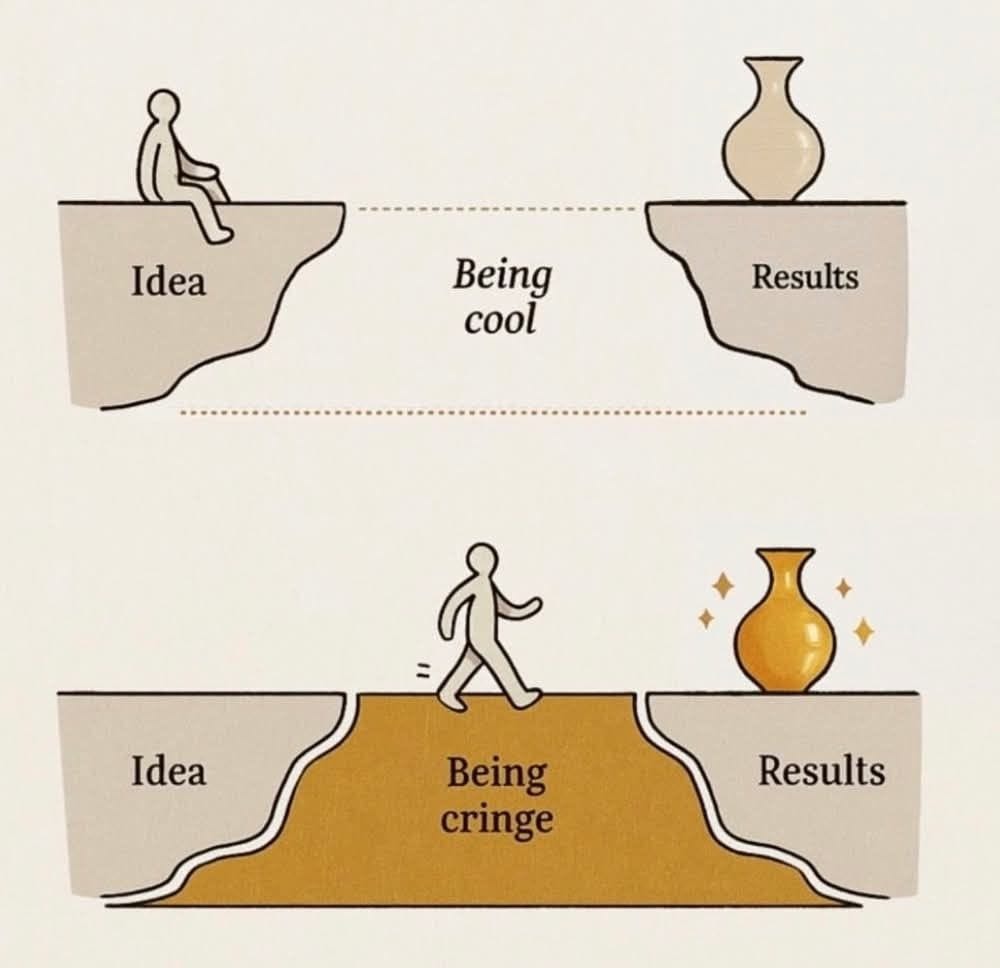
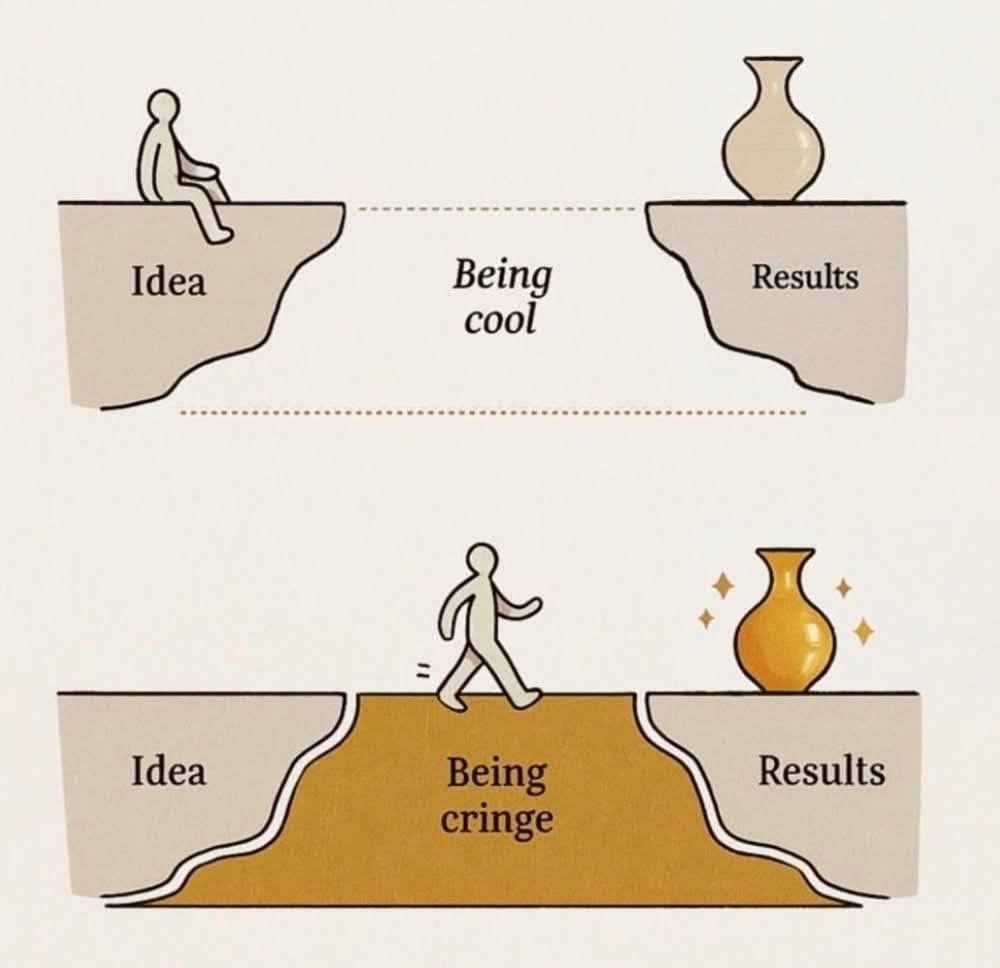
This meme:
THANKYOU Dennis!!! This article explains the recruitment process so clearly, and personally makes me a lot less uncertain about what to expect😊 Noticed the edits you made here and there too—made an already-great article even better
Super insightful! A must-read for anyone trying to recruit for consulting!